
Wastewater treatment depends on knowing what is happening inside a treatment plant. Yet in many plants, that information is still collected manually. Operators take samples, analyse them in laboratories and only then discover whether the treatment process needs adjustment. By that time, valuable hours may already have been lost, impacting the plant’s operational efficiency and increasing risks.
Brazil is one of the countries investing heavily in expanding its wastewater treatment infrastructure. As treatment coverage grows, so does the need for affordable technologies that help treatment plants operate more efficiently. That is exactly the challenge the Solidus project aims to address.
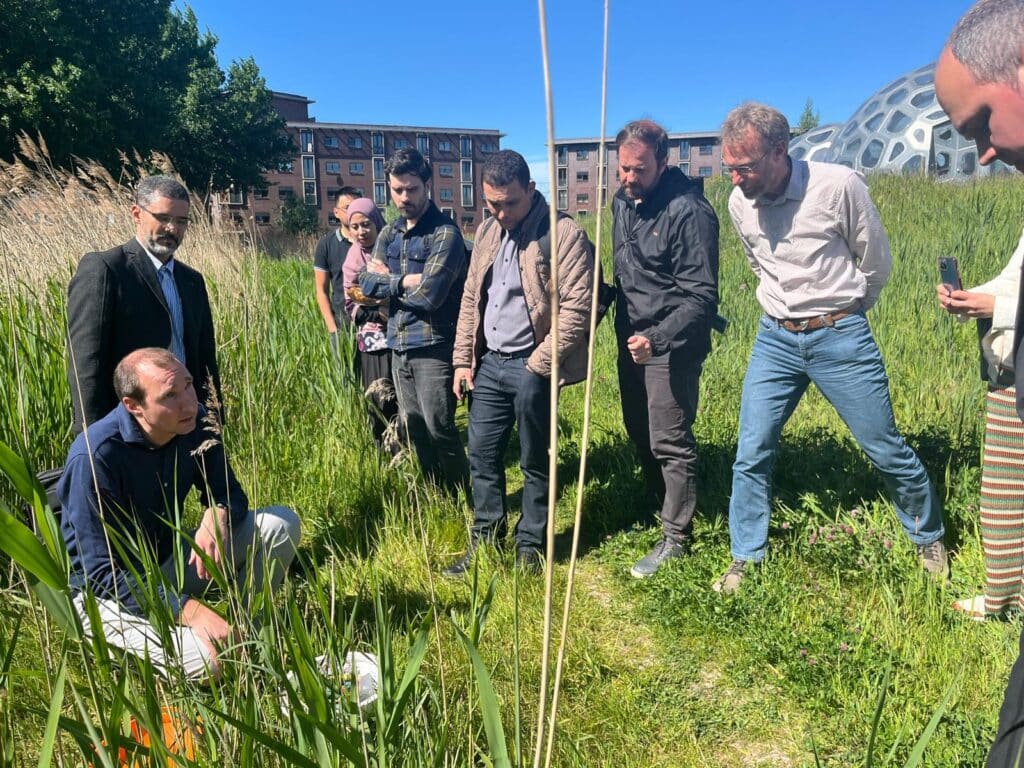
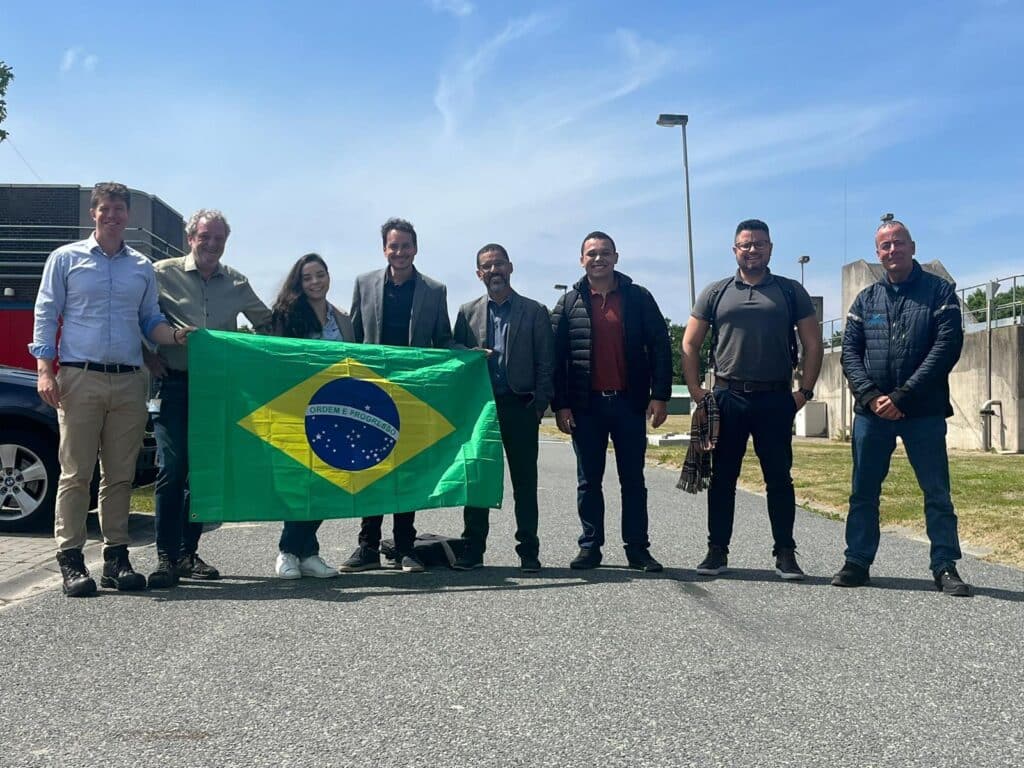
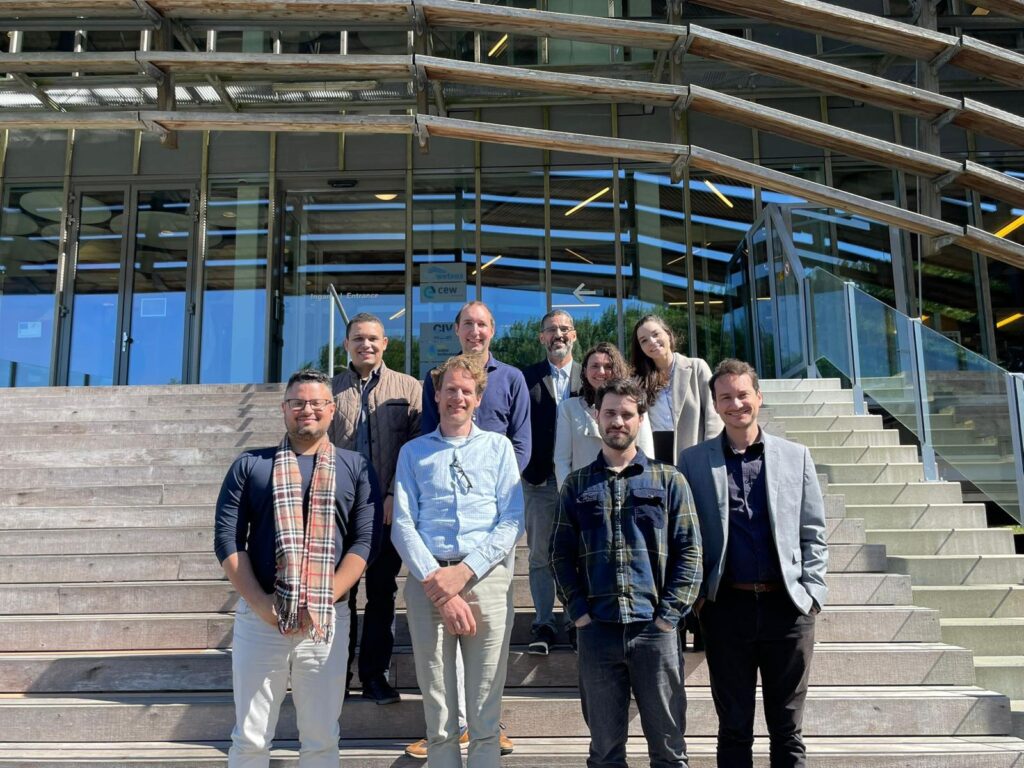
Over the past two years, Dutch and Brazilian partners have worked together in the Partners for Water project Solidus to test a low-cost sensor for continuous wastewater monitoring. Following a recent project visit to Brazil, Luewton Agostinho, professor at NHL Stenden, believes the results are encouraging.
“The sensor works, it responds to changes in the process and it survived real operating conditions,” he says. “Those are important milestones.”
A growing need for automation
According to Agostinho, the challenge is also a pressing one for Brazil. Only around half of the population currently has access to wastewater treatment infrastructure.
“There is a huge need to improve treatment capacity,” Agostinho explains. “The question is whether we can continue to rely on manual operation as the system grows.”
Historically, many Brazilian utility companies have chosen labour-intensive solutions because sensor technology was expensive and technical staff costs were comparatively low. Today, however, that equation is changing. Treatment plants are becoming larger and more complex, while automation technologies are becoming more affordable. This creates opportunities for new approaches.
Monitoring what matters
At the centre of the Solidus project is a deceptively simple question: how much solid material is present inside a treatment reactor?
Wastewater treatment relies on a carefully balanced biological process in which microorganisms break down contaminants. For the system to function properly, the concentration of suspended particles and sludge must remain within certain limits. “The reactor has to stay in balance,” Agostinho explains. If sludge concentrations become too high or too low, the treatment process becomes less efficient, reducing water quality and increasing the risk that pollutants are discharged into rivers and waterways.
The challenge is that many treatment plants only measure these concentrations intermittently. Operators take a sample, bring it to a laboratory and receive results later. By that time, conditions inside the reactor may already have changed.
“You might discover today that there was a problem yesterday,” Agostinho says. “By then, the poor-quality water may already have been discharged.”
Rather than relying on periodic sampling, sensors can provide real-time information, allowing operators to respond immediately when conditions begin to drift outside acceptable ranges.
A different approach
The project builds on earlier wastewater monitoring initiatives, including Lampion and Inovio, which explored innovative monitoring technologies for wastewater treatment. Unlike many commercial monitoring systems currently on the market, the new sensor uses ultrasound rather than optical measurement techniques.
That distinction is important, Agostinho explains. Commercial optical sensors can be highly accurate, but they are often too expensive for many treatment plants in emerging markets. The ultrasound-based approach is technically simpler and less expensive. Although it is slightly less precise, Agostinho says the accuracy is sufficient for this application.
The central question for the project was therefore straightforward: can a lower-cost sensor still provide reliable information under real operating conditions? To answer that question, the consortium moved beyond laboratory testing and installed the sensor inside an operational wastewater treatment plant in Brazil. The device has now been running continuously for more than seven months.
From laboratory to reality
For Agostinho, one of the project’s greatest achievements is that it successfully crossed the gap between laboratory research and practical implementation.
UASB reactors are harsh places. Equipment must withstand moisture, contamination, temperature fluctuations and constant exposure to industrial conditions. Technologies that work perfectly in the laboratory often struggle once deployed in the field.
The Solidus team deliberately designed a simple prototype and exposed it directly to these challenges. The sensor successfully tracked changes in the concentrations of solids, responding to the same fluctuations detected by a commercially available reference sensor installed alongside it. The sensor registered operational changes, process disturbances and weather-related effects in real time. And most importantly, it remained operational throughout the testing period.
“The sensor works, it responded and it survived,” Agostinho says.
Remaining challenges
Although the pilot produced encouraging results, Agostinho explains that several steps are still needed before the sensor is ready for the market.
The first challenge is product design. The current sensor proved that the technology works, but it was deliberately built as a simple, low-cost prototype. “We now need to move to a nice commercial design,” Agostinho says, describing a product that utility companies will recognise as a professional, market-ready sensor.
The second challenge is communication and data management. According to Agostinho, operators experienced problems with the sensor’s interface and with accessing measurement data. Improving the electronics, communication and automation of the system is therefore one of the main priorities for the next phase.
A third challenge is market deployment. So far, the sensor has been tested in a single wastewater treatment plant. The next step is to install several systems at different sites to verify that the technology performs equally well under a wider range of operating conditions. “If we still get the thumbs up, then I think the sensor is ready,” Agostinho says.
Local ownership
And there is one more challenge: commercialisation, which also raises important strategic questions.
Manufacturing sensors in the Netherlands and exporting them to Brazil would increase costs and potentially undermine one of the technology’s key advantages: affordability. As a result, project partners are exploring models that would allow local production, assembly and distribution. The goal is to identify Brazilian partners who can take ownership of the technology and help bring it to market. “We want local companies to feel that this is their solution as well,” Agostinho says.
We want local companies to feel that this is their solution as well.
The value of international collaboration
Solidus is expected to continue in a follow-up project, with further testing and commercial development through the Dutch Partners for Water programme, which encourages collaboration between Dutch organisations and international partners on water challenges.
For Agostinho, the experience highlights the strengths that different countries can bring to innovation. “We have to learn a lot from Brazil, from how flexible and open they are to collaboration and implementation. And Brazil has a lot to learn from the Netherlands as well,” Agostinho says.
The collaboration has also benefited students and young professionals, several of whom travelled to Brazil during the project to conduct measurements and work directly with local partners.
Looking ahead
As the current project phase draws to a close, the outlook remains positive.
The technology has demonstrated its technical potential, and plans are now taking shape for the next phase. The consortium aims to test the sensor at five wastewater treatment plants under different operating conditions, while refining the commercial design and preparing for wider market deployment.
For Agostinho, the project illustrates how relatively simple innovations can make a significant difference. “We live in a time when water challenges are becoming more complex,” he says. “Climate change, water scarcity and environmental pressures require new solutions.”
Not every innovation needs to be revolutionary. The project shows that innovation can lie in improving existing technologies rather than reinventing them. If Solidus succeeds in doing that, it could help wastewater treatment plants across Brazil operate more efficiently, improve water quality and prepare for the growing demands of the future. But for Agostinho, the project’s most enduring impact extends beyond the technology itself. “The technology can disappear, but the people will stay.”
Find out about other Innovation in Progress projects
For decades, desalination has been presented as one of the most promising answers to growing water scarcity. As droughts intensify and freshwater sources come under increasing pressure, more countries are turning to the sea to secure their water supply. Yet every litre of drinking water produced through desalination leaves behind a highly concentrated salt solution known as brine – a by-product that is usually discharged back into the ocean.
What if that waste stream could become a resource instead?
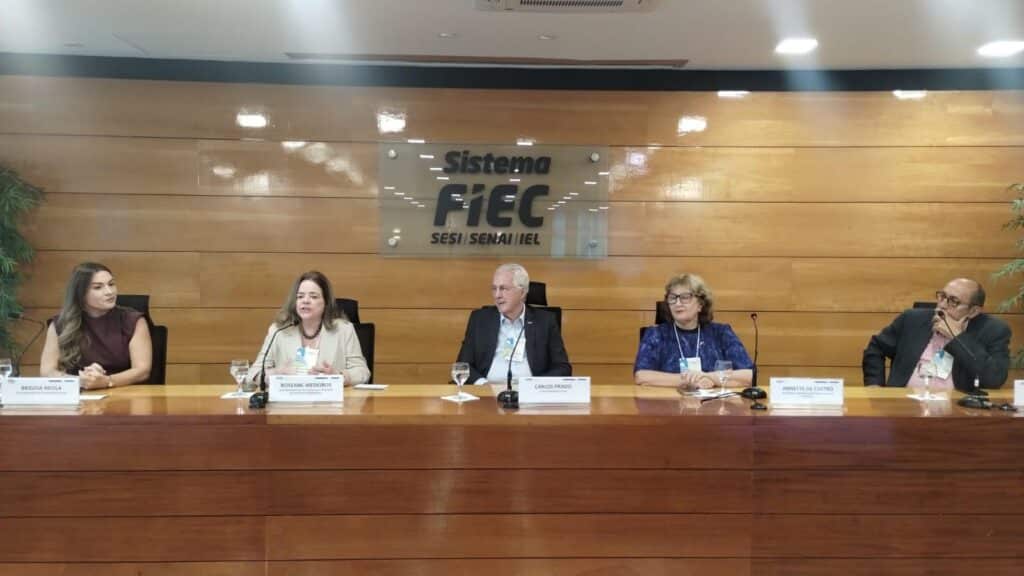
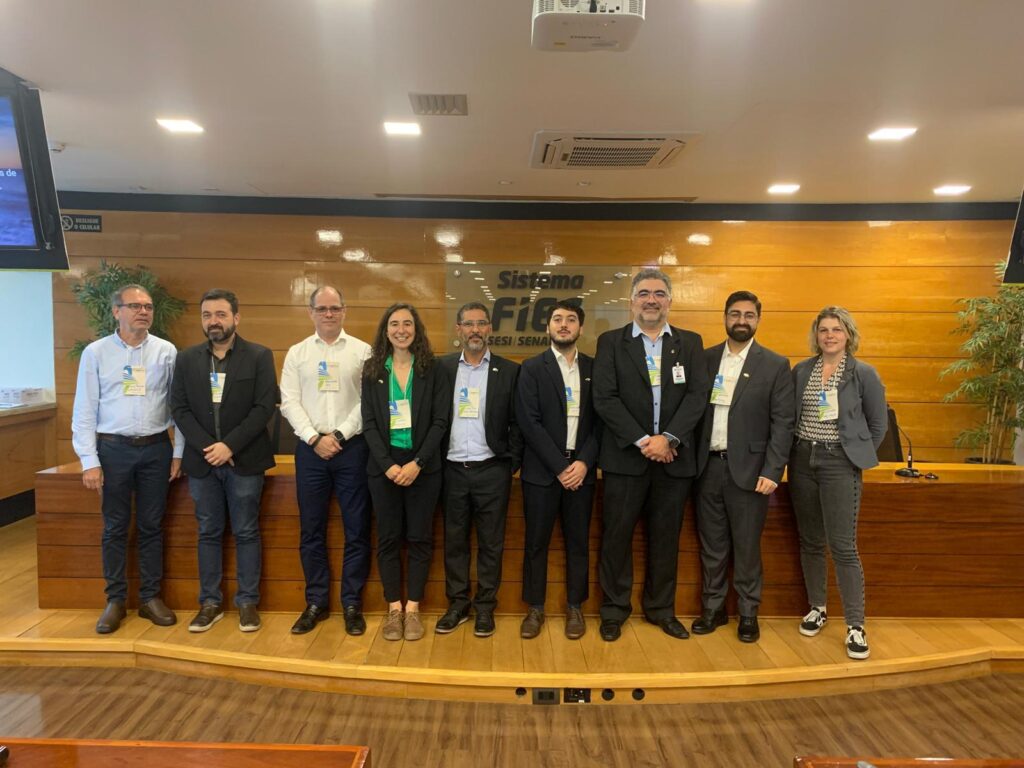
That question lies at the heart of the Partners for Water project Smart Brine, a Dutch-Brazilian collaboration that has spent the past two years exploring how desalination brine can be transformed into valuable products. The project recently reached an important milestone, with project partners meeting in Brazil to review findings and discuss the next steps.
“We expected to identify possibilities for the future,” says Luewton Agostinho, professor at NHL Stenden, “technologies that might become viable in three to five years. What surprised us was discovering that one of the most promising solutions is actually much closer to implementation than we thought.”
Waste as a missed opportunity
Although discharging brine into the sea remains legal in most countries, scientists have raised concerns about the long-term environmental impacts, particularly as the number of desalination plants continues to increase.
The challenge is not simply the salt itself. Brine may also contain treatment chemicals used during the desalination process, while thermal desalination plants can discharge water at elevated temperatures. Together, these factors can affect local marine ecosystems.
Agostinho sees it differently: brine is a missed opportunity. “Many of the compounds present in brine already have economic value,” Agostinho explains. “The question is whether we can recover part of that value in a way that is technically and economically feasible.”

The most promising pathway
At the start of the project, the consortium explored three possible routes: mineral recovery, chemical production and energy generation.
One of the project’s most important achievements was identifying which of these pathways offers the greatest chance of success.
The clear frontrunner turned out to be chemical recovery.
“If you look at seawater composition, there is no big mystery,” Agostinho says. “The main salt is sodium chloride – about 85 percent of everything – followed by smaller amounts of magnesium and calcium.”
For the project, sodium chloride offered the most promising route. “We want to split these two elements electrochemically,” Agostinho explains. “The chloride will be used in the plant itself. It’s a cleaning agent, but it’s also a disinfectant agent. And from the sodium, you can make a strong base, sodium hydroxide, which is also widely used in industry. Magnesium and calcium are also good options, but chlorination is the first priority.”
The technologies required for this process already exist and are commercially available. The challenge therefore lies not in developing entirely new technologies but in combining existing ones into an efficient treatment chain.
“That was our first major breakthrough,” says Agostinho. “We realised that this is not fundamentally a technology challenge. It is much more of a process challenge. The pieces already exist.”
We realised that this is not fundamentally a technology challenge. It is much more of a process challenge. The pieces already exist.
Listening to the market
Promising as it may be, technical feasibility alone is not enough. A solution only becomes viable if someone is willing to pay for the end product.
To assess market potential, the project brought together water companies, industrial users and local stakeholders in a series of workshops and consultations. From dozens of potential users, the consortium identified a smaller group of companies with realistic interest in purchasing recovered products.
“We are engineers and technology specialists,” says Agostinho. “So we worked together with business developers who helped us understand the market side. The key question is always: what is the product worth, and what are end users willing to pay?”
Those discussions reinforced confidence in the chemical recovery route. The market already exists. The customers already exist. What Smart Brine changes is the source of the raw material: instead of buying salt, desalination plants could produce the same chemicals from their own brine.
A desalination plant could potentially generate far larger quantities of raw material than current producers use. While that creates opportunities, it also raises new questions about market demand.
The objective, however, is not to eliminate brine discharge entirely. “Full brine recovery remains extremely challenging,” Agostinho says. “The volumes involved are enormous. We don’t have to solve the entire problem at once. If we can recover a meaningful fraction, that is already progress.”
The economics question
Yet one major hurdle remains: economics.
Because brine discharge is still permitted, desalination companies currently have little regulatory incentive to invest in alternative solutions. So any new system must make financial sense on its own. That means competing with existing industrial processes that rely on extremely cheap raw materials.
“The technologies work,” says Agostinho. “The real question is whether we can make them work at a competitive cost.”
The consortium has developed economic models and preliminary calculations that suggest the concept may be viable. However, the projected costs remain close enough to existing market prices that further validation is required.
To answer those questions definitively, pilot-scale testing will be necessary. “We are confident enough to move forward,” Agostinho says. “But we need real operational data before we can say with certainty that the business case works.”
Looking ahead
Although the current project phase is nearing completion, the meetings in Brazil left little doubt: the partners want to continue. The consortium is already exploring new funding opportunities to support pilot-scale implementation and further development.
For Agostinho, the project is also deeply personal. The desalination plant involved is located in the region where he grew up, and his connection with the local water company dates back almost thirty years, to an internship during his civil engineering studies.
“I have been working with these people in one way or another for almost thirty years,” he says. “Maybe one day I will drive past the plant with my grandchildren,” he reflects. “And I will be able to say: I helped create that.”

