

Making wastewater treatment smarter: how the Solidus project is making continuous monitoring affordable
Date
30 Sep' 2026Share
Index
Wastewater treatment depends on knowing what is happening inside a treatment plant. Yet in many plants, that information is still collected manually. Operators take samples, analyse them in laboratories and only then discover whether the treatment process needs adjustment. By that time, valuable hours may already have been lost, impacting the plant’s operational efficiency and increasing risks.
Brazil is one of the countries investing heavily in expanding its wastewater treatment infrastructure. As treatment coverage grows, so does the need for affordable technologies that help treatment plants operate more efficiently. That is exactly the challenge the Solidus project aims to address.
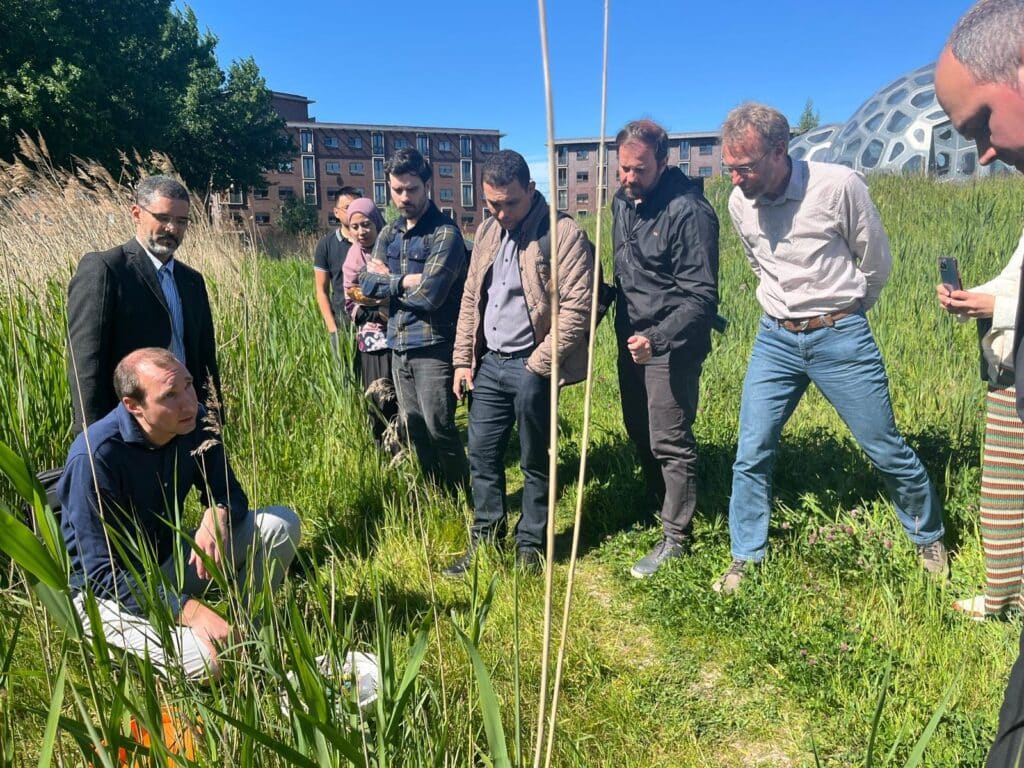
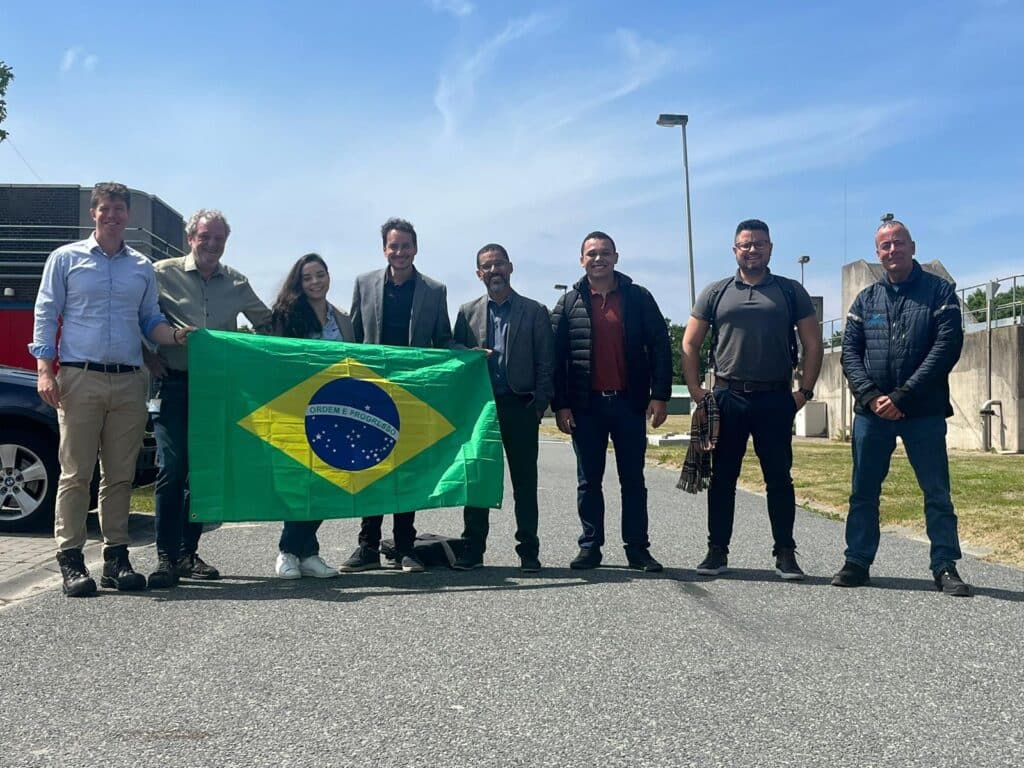
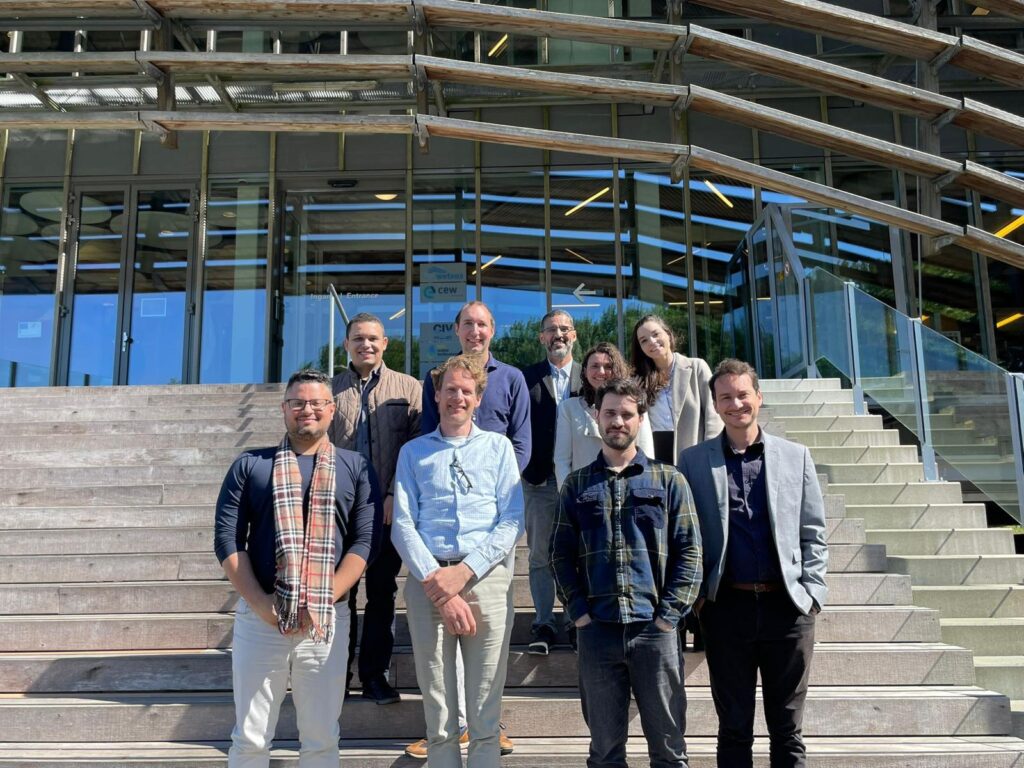
Over the past two years, Dutch and Brazilian partners have worked together in the Partners for Water project Solidus to test a low-cost sensor for continuous wastewater monitoring. Following a recent project visit to Brazil, project coordinator Luewton Agostinho of NHL Stenden University of Applied Sciences believes the results are encouraging.
“The sensor works, it responds to changes in the process and it survived real operating conditions,” he says. “Those are important milestones.”
A growing need for automation
According to Agostinho, the challenge is also a pressing one for Brazil. Only around half of the population currently has access to wastewater treatment infrastructure.
“There is a huge need to improve treatment capacity,” Agostinho explains. “The question is whether we can continue to rely on manual operation as the system grows.”
Historically, many Brazilian utility companies have chosen labour-intensive solutions because sensor technology was expensive and technical staff costs were comparatively low. Today, however, that equation is changing. Treatment plants are becoming larger and more complex, while automation technologies are becoming more affordable. This creates opportunities for new approaches.
Monitoring what matters
At the centre of the Solidus project is a deceptively simple question: how much solid material is present inside a treatment reactor?
Wastewater treatment relies on a carefully balanced biological process in which microorganisms break down contaminants. For the system to function properly, the concentration of suspended particles and sludge must remain within certain limits. “The reactor has to stay in balance,” Agostinho explains. If sludge concentrations become too high or too low, the treatment process becomes less efficient, reducing water quality and increasing the risk that pollutants are discharged into rivers and waterways.
The challenge is that many treatment plants only measure these concentrations intermittently. Operators take a sample, bring it to a laboratory and receive results later. By that time, conditions inside the reactor may already have changed.
“You might discover today that there was a problem yesterday,” Agostinho says. “By then, the poor-quality water may already have been discharged.”
Rather than relying on periodic sampling, sensors can provide real-time information, allowing operators to respond immediately when conditions begin to drift outside acceptable ranges.
A different approach
The project builds on earlier wastewater monitoring initiatives, including Lampion and Inovio, which explored innovative monitoring technologies for wastewater treatment. Unlike many commercial monitoring systems currently on the market, the new sensor uses ultrasound rather than optical measurement techniques.
That distinction is important, Agostinho explains. Commercial optical sensors can be highly accurate, but they are often too expensive for many treatment plants in emerging markets. The ultrasound-based approach is technically simpler and less expensive. Although it is slightly less precise, Agostinho says the accuracy is sufficient for this application.
The central question for the project was therefore straightforward: can a lower-cost sensor still provide reliable information under real operating conditions? To answer that question, the consortium moved beyond laboratory testing and installed the sensor inside an operational wastewater treatment plant in Brazil. The device has now been running continuously for more than seven months.
From laboratory to reality
For Agostinho, one of the project’s greatest achievements is that it successfully crossed the gap between laboratory research and practical implementation.
UASB reactors are harsh places. Equipment must withstand moisture, contamination, temperature fluctuations and constant exposure to industrial conditions. Technologies that work perfectly in the laboratory often struggle once deployed in the field.
The Solidus team deliberately designed a simple prototype and exposed it directly to these challenges. The sensor successfully tracked changes in the concentrations of solids, responding to the same fluctuations detected by a commercially available reference sensor installed alongside it. The sensor registered operational changes, process disturbances and weather-related effects in real time. And most importantly, it remained operational throughout the testing period.
“The sensor works, it responded and it survived,” Agostinho says.
Remaining challenges
Although the pilot produced encouraging results, Agostinho explains that several steps are still needed before the sensor is ready for the market.
The first challenge is product design. The current sensor proved that the technology works, but it was deliberately built as a simple, low-cost prototype. “We now need to move to a nice commercial design,” Agostinho says, describing a product that utility companies will recognise as a professional, market-ready sensor.
The second challenge is communication and data management. According to Agostinho, operators experienced problems with the sensor’s interface and with accessing measurement data. Improving the electronics, communication and automation of the system is therefore one of the main priorities for the next phase.
A third challenge is market deployment. So far, the sensor has been tested in a single wastewater treatment plant. The next step is to install several systems at different sites to verify that the technology performs equally well under a wider range of operating conditions. “If we still get the thumbs up, then I think the sensor is ready,” Agostinho says.
Local ownership
And there is one more challenge: commercialisation, which also raises important strategic questions.
Manufacturing sensors in the Netherlands and exporting them to Brazil would increase costs and potentially undermine one of the technology’s key advantages: affordability. As a result, project partners are exploring models that would allow local production, assembly and distribution. The goal is to identify Brazilian partners who can take ownership of the technology and help bring it to market. “We want local companies to feel that this is their solution as well,” Agostinho says.
We want local companies to feel that this is their solution as well.
The value of international collaboration
Solidus is expected to continue in a follow-up project, with further testing and commercial development through the Dutch Partners for Water programme, which encourages collaboration between Dutch organisations and international partners on water challenges.
For Agostinho, the experience highlights the strengths that different countries can bring to innovation. “We have to learn a lot from Brazil, from how flexible and open they are to collaboration and implementation. And Brazil has a lot to learn from the Netherlands as well,” Agostinho says.
The collaboration has also benefited students and young professionals, several of whom travelled to Brazil during the project to conduct measurements and work directly with local partners.
Looking ahead
As the current project phase draws to a close, the outlook remains positive.
The technology has demonstrated its technical potential, and plans are now taking shape for the next phase. The consortium aims to test the sensor at five wastewater treatment plants under different operating conditions, while refining the commercial design and preparing for wider market deployment.
For Agostinho, the project illustrates how relatively simple innovations can make a significant difference. “We live in a time when water challenges are becoming more complex,” he says. “Climate change, water scarcity and environmental pressures require new solutions.”
Not every innovation needs to be revolutionary. The project shows that innovation can lie in improving existing technologies rather than reinventing them. If Solidus succeeds in doing that, it could help wastewater treatment plants across Brazil operate more efficiently, improve water quality and prepare for the growing demands of the future. But for Agostinho, the project’s most enduring impact extends beyond the technology itself. “The technology can disappear, but the people will stay.”
Find out about other Innovation in Progress projects

