
From waste to resource: unlocking the value of brine
Date
09 Sep' 2026Share
Index
For decades, desalination has been presented as one of the most promising answers to growing water scarcity. As droughts intensify and freshwater sources come under increasing pressure, more countries are turning to the sea to secure their water supply. Yet every litre of drinking water produced through desalination leaves behind a highly concentrated salt solution known as brine – a by-product that is usually discharged back into the ocean.
What if that waste stream could become a resource instead?
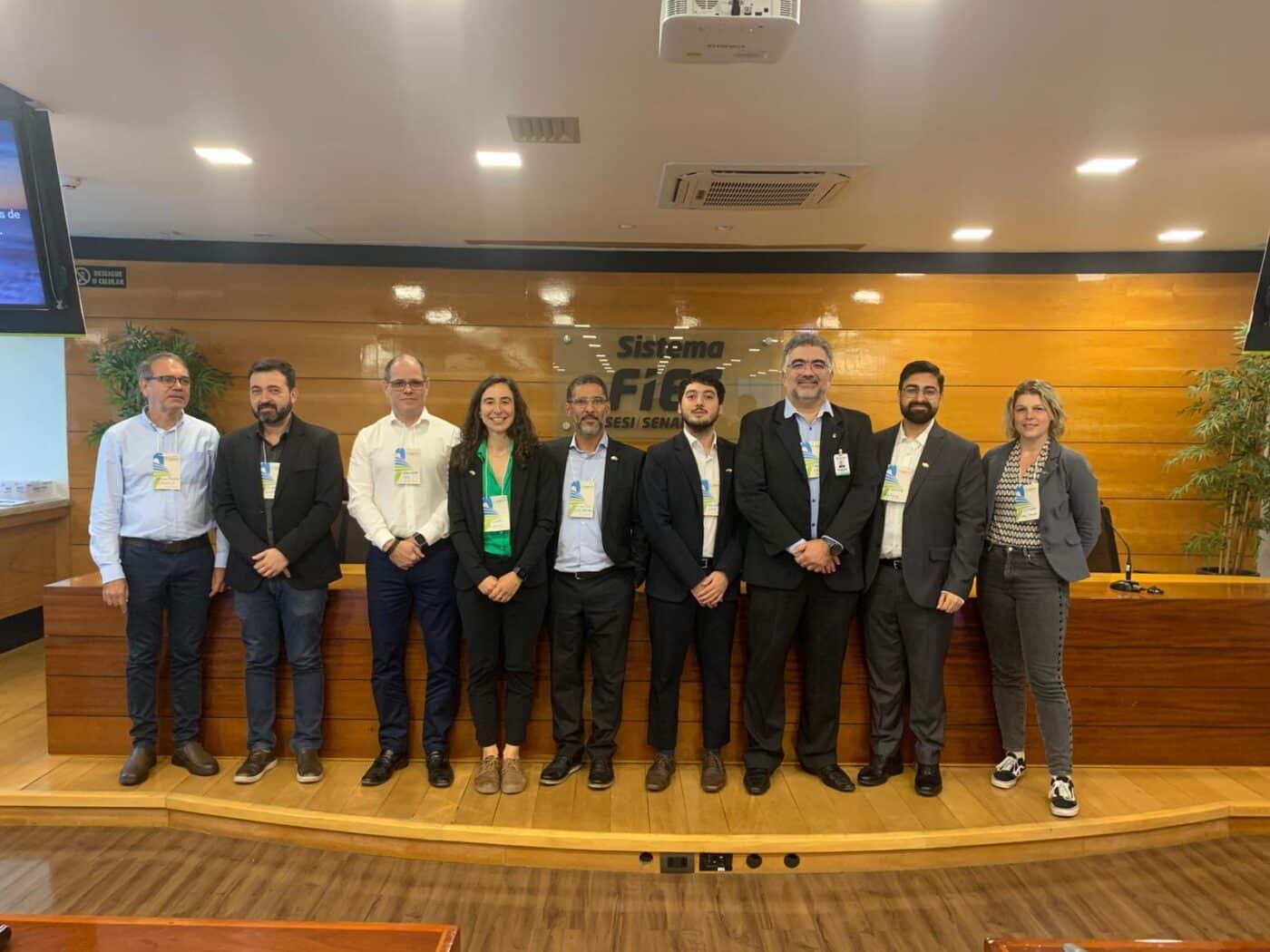
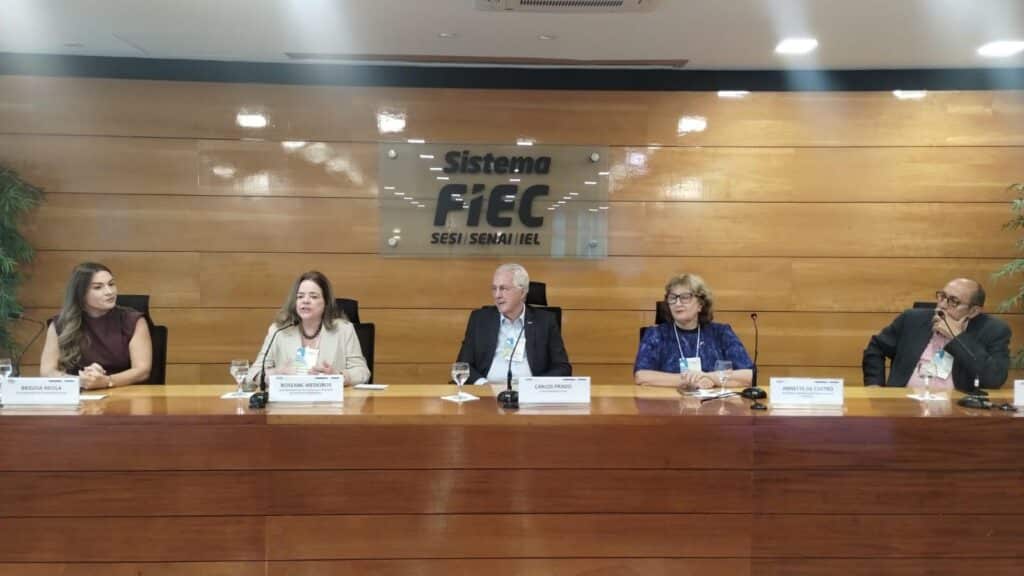
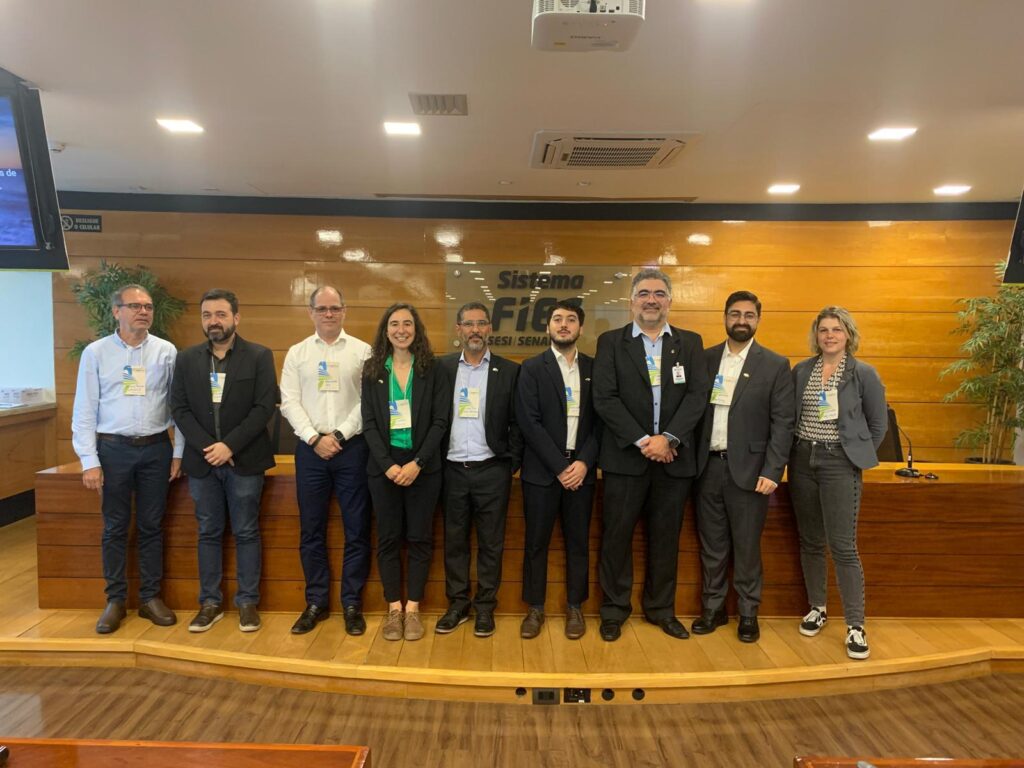
That question lies at the heart of the Partners for Water project Smart Brine, a Dutch-Brazilian collaboration that has spent the past two years exploring how desalination brine can be transformed into valuable products. The project recently reached an important milestone, with project partners meeting in Brazil to review findings and discuss the next steps.
“We expected to identify possibilities for the future,” says Luewton Agostinho, professor at NHL Stenden, “technologies that might become viable in three to five years. What surprised us was discovering that one of the most promising solutions is actually much closer to implementation than we thought.”
Waste as a missed opportunity
Although discharging brine into the sea remains legal in most countries, scientists have raised concerns about the long-term environmental impacts, particularly as the number of desalination plants continues to increase.
The challenge is not simply the salt itself. Brine may also contain treatment chemicals used during the desalination process, while thermal desalination plants can discharge water at elevated temperatures. Together, these factors can affect local marine ecosystems.
Agostinho sees it differently: brine is a missed opportunity. “Many of the compounds present in brine already have economic value,” Agostinho explains. “The question is whether we can recover part of that value in a way that is technically and economically feasible.”

The most promising pathway
At the start of the project, the consortium explored three possible routes: mineral recovery, chemical production and energy generation.
One of the project’s most important achievements was identifying which of these pathways offers the greatest chance of success.
The clear frontrunner turned out to be chemical recovery.
“If you look at seawater composition, there is no big mystery,” Agostinho says. “The main salt is sodium chloride – about 85 percent of everything – followed by smaller amounts of magnesium and calcium.”
For the project, sodium chloride offered the most promising route. “We want to split these two elements electrochemically,” Agostinho explains. “The chloride will be used in the plant itself. It’s a cleaning agent, but it’s also a disinfectant agent. And from the sodium, you can make a strong base, sodium hydroxide, which is also widely used in industry. Magnesium and calcium are also good options, but chlorination is the first priority.”
The technologies required for this process already exist and are commercially available. The challenge therefore lies not in developing entirely new technologies but in combining existing ones into an efficient treatment chain.
“That was our first major breakthrough,” says Agostinho. “We realised that this is not fundamentally a technology challenge. It is much more of a process challenge. The pieces already exist.”
We realised that this is not fundamentally a technology challenge. It is much more of a process challenge. The pieces already exist.
Listening to the market
Promising as it may be, technical feasibility alone is not enough. A solution only becomes viable if someone is willing to pay for the end product.
To assess market potential, the project brought together water companies, industrial users and local stakeholders in a series of workshops and consultations. From dozens of potential users, the consortium identified a smaller group of companies with realistic interest in purchasing recovered products.
“We are engineers and technology specialists,” says Agostinho. “So we worked together with business developers who helped us understand the market side. The key question is always: what is the product worth, and what are end users willing to pay?”
Those discussions reinforced confidence in the chemical recovery route. The market already exists. The customers already exist. What Smart Brine changes is the source of the raw material: instead of buying salt, desalination plants could produce the same chemicals from their own brine.
A desalination plant could potentially generate far larger quantities of raw material than current producers use. While that creates opportunities, it also raises new questions about market demand.
The objective, however, is not to eliminate brine discharge entirely. “Full brine recovery remains extremely challenging,” Agostinho says. “The volumes involved are enormous. We don’t have to solve the entire problem at once. If we can recover a meaningful fraction, that is already progress.”
The economics question
Yet one major hurdle remains: economics.
Because brine discharge is still permitted, desalination companies currently have little regulatory incentive to invest in alternative solutions. So any new system must make financial sense on its own. That means competing with existing industrial processes that rely on extremely cheap raw materials.
“The technologies work,” says Agostinho. “The real question is whether we can make them work at a competitive cost.”
The consortium has developed economic models and preliminary calculations that suggest the concept may be viable. However, the projected costs remain close enough to existing market prices that further validation is required.
To answer those questions definitively, pilot-scale testing will be necessary. “We are confident enough to move forward,” Agostinho says. “But we need real operational data before we can say with certainty that the business case works.”
Looking ahead
Although the current project phase is nearing completion, the meetings in Brazil left little doubt: the partners want to continue. The consortium is already exploring new funding opportunities to support pilot-scale implementation and further development.
For Agostinho, the project is also deeply personal. The desalination plant involved is located in the region where he grew up, and his connection with the local water company dates back almost thirty years, to an internship during his civil engineering studies.
“I have been working with these people in one way or another for almost thirty years,” he says. “Maybe one day I will drive past the plant with my grandchildren,” he reflects. “And I will be able to say: I helped create that.”

Partners for Water is a Dutch government programme enhancing water security internationally in long-term cooperation with local partners and the Dutch water sector. By facilitating strategic planning and support in the early stages of innovation, the programme aims to contribute to systemic change for sustainable water management and infrastructure. This is how we initiate impactful changes for a better living environment.

